AI models keep improving, which makes it easy to think my skills are too.
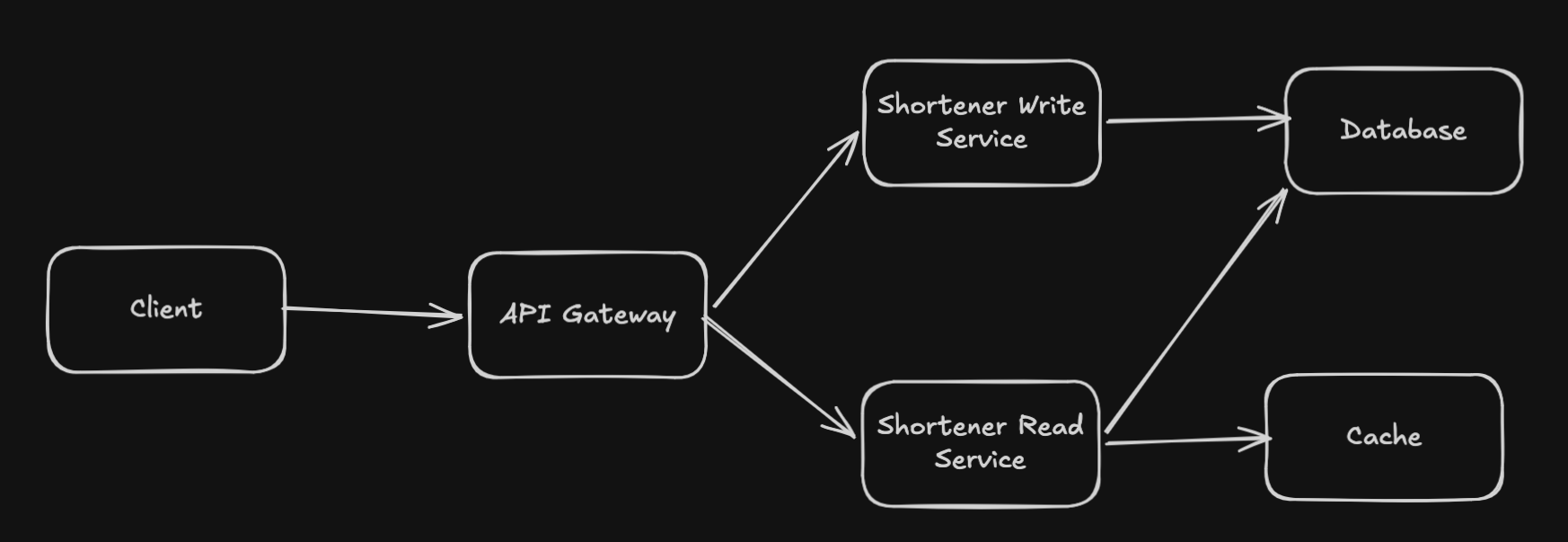
I used to create system design diagrams by hand. I’d sketch components in Excalidraw, draw arrows between boxes, label everything, and feed the finished diagram to Claude (an AI coding assistant) to seed a design doc.
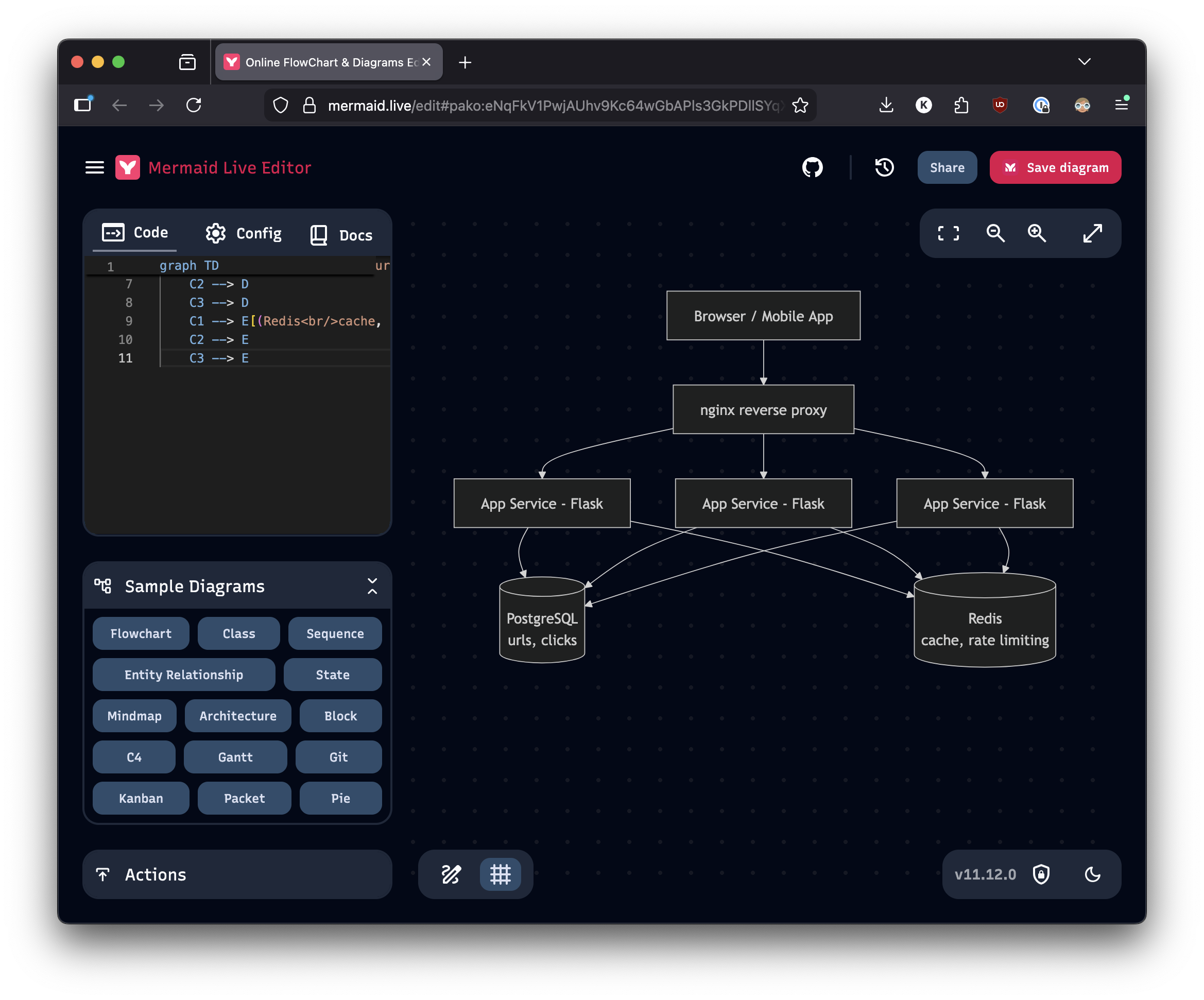
Then I had Claude generate diagrams in mermaid syntax. I’d take that text to mermaid.live, paste it in, wrangle the image, and upload it to my doc.
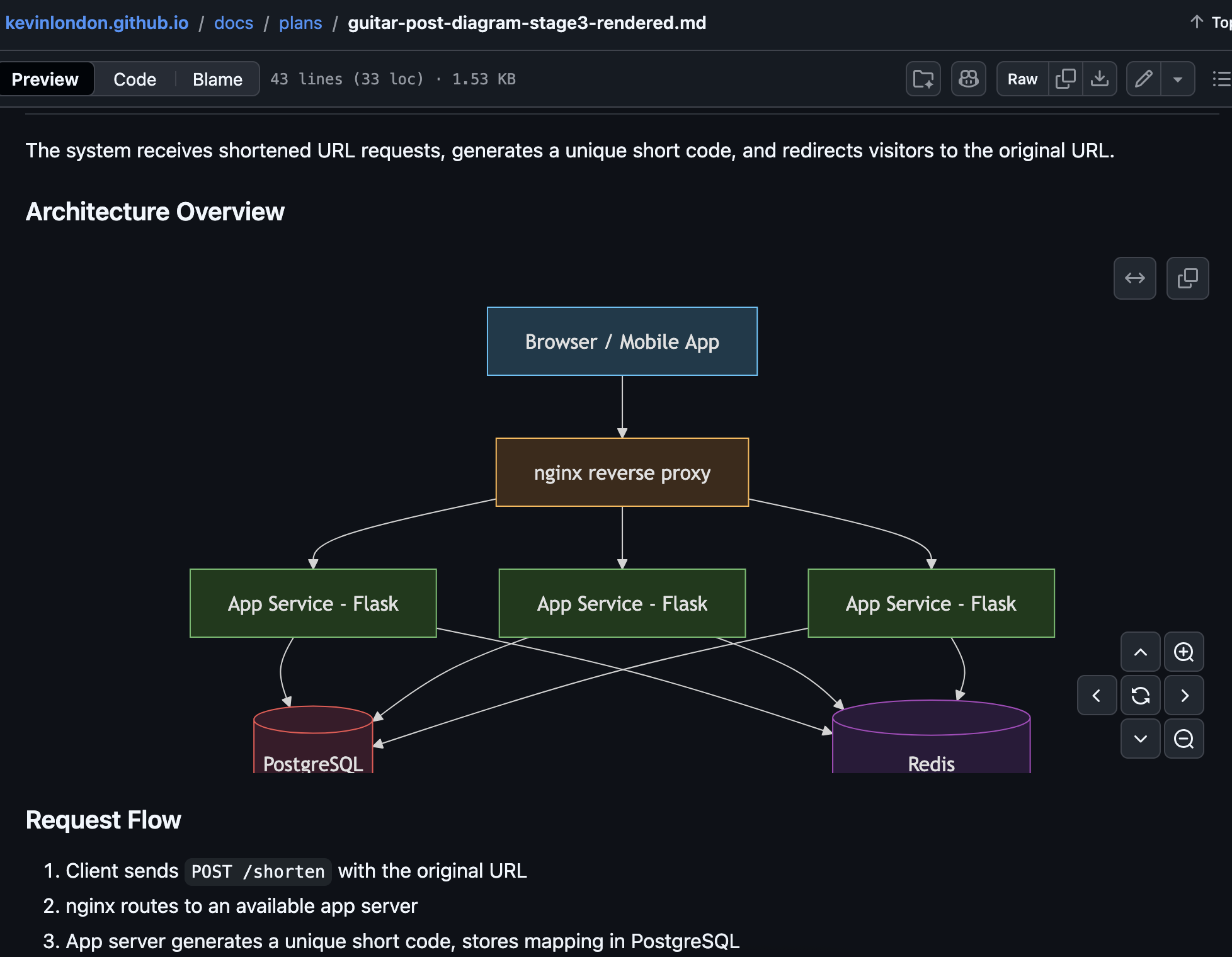
Then one day, embarrassingly recently, I thought: why am I doing this? Claude can make diagrams. So I asked Claude to make the diagram and included it directly in the doc. I moved the whole workflow into markdown and only touched Google Docs when it was ready to share.
At each step, I used AI to help me make the diagram. At each one, I was also in my own way. I hadn’t learned (or maybe trusted) what AI could actually do, so I kept inserting myself where I wasn’t needed.
AI is an instrument
I chatted with my friend Bill about this and he said: AI is an instrument. It’s like playing the guitar.
That made sense to me. You can play a surprising number of songs with just a few simple combinations of notes called chords. G, C, Em, D, and you’ve got Wonderwall, Let It Be, No Woman No Cry, and a huge chunk of the acoustic campfire catalogue. Knowing four chords gets you far, but it doesn’t make you a guitarist.
Basic AI usage works the same way. Telling it what I want, giving it context, reviewing and iterating on its output. Those are the four chords. The models keep getting better, so my output improves even if my skills don’t. It’s easy to mistake the guitar getting better for the player getting better.
I have to play scales, not just songs. Scales aren’t fun. They’re the part where I admit the way I’ve been doing something isn’t good enough.
Muscle memory
Boris Cherny, the creator of Claude Code, told a story on Lenny’s podcast about tracking down a memory leak. He snapshotted the program’s memory, opened a debugger, and traced through it manually, as he’d always done.
A newer engineer on his team saw what he was doing and asked why. The other engineer just asked Claude to figure it out. Claude took the snapshot, wrote an analysis tool, found the issue, and fixed it faster than Boris could.
Years of habit pointed Boris toward the tools he knew before the question “should I still be doing this?” even fired.
His team has a saying: “What’s better than doing something? Having Claude do it.” I’d extend that with the questions I find myself asking now: Can Claude do this? If not, why not? Can I help it get there by giving it tools or more context, or is it something I need to do myself?
Why doesn’t it work for me?
I talk to engineers who feel frustrated by AI tooling. I get it. I was the one pasting diagrams into Google Docs earlier in this post.
A friend told me they tried to have AI write a design doc. It analyzed their code and delivered a design they felt was about 60% right, so they wrote it off.
In my experience, failure is the starting point. Which 60% did it get right, and why? What context was missing from the other 40%? What happens if you feed it what it missed?
The difference comes down to one question after every failure: why didn’t this work?
When something fails, I run through questions before I take over:
- Can it do this if I give it more context?
- Would a repeatable workflow help, something I can encode once and reuse?
- Does it need access to a tool or data source it doesn’t have yet?
- Is it just missing something that’s in my head and not written down anywhere?
Usually it’s one of those, and writing it down helps other people too.
Still practicing
There’s a guitar gathering dust behind me in my office. I can play a handful of songs, but I plateaued because I played the ones I liked and didn’t push past them. I didn’t decide to stop improving. I just did, so gradually I didn’t notice until months had passed, then years.
That’s what I watch for now with AI. That I’ll get comfortable with my four chords and stop there, playing the same songs and calling it practice. The workflow I use today will look as cumbersome in six months as my diagram workflow looks to me now. I’ll feel embarrassed and adjust. Again and again.