Light Iron recently announced it was winding down operations. This isn’t quite a eulogy for the company, more a eulogy for my time there.
Light Iron was a post-production film company in Hollywood that specialized in color grading. Basically, Photoshop for an entire movie. It was my first real job, my first family in LA, and where I started my software engineering career.
When I looked for internships, I drove to the top post houses in LA in a suit and handed my resume to whoever would take it. Light Iron called me back.
At the time, Light Iron operated out of the back of a camera rental house with seven or eight people. They brought me on as the first intern and, eventually, one of the first non-cofounder hires while I was in my senior year of film school at Long Beach State.
Carissa and I had just started dating (we’re married now), and our first company outing was to the Arclight for opening night of The Social Network, which they had finished coloring. I didn’t quite know what I’d walked into.
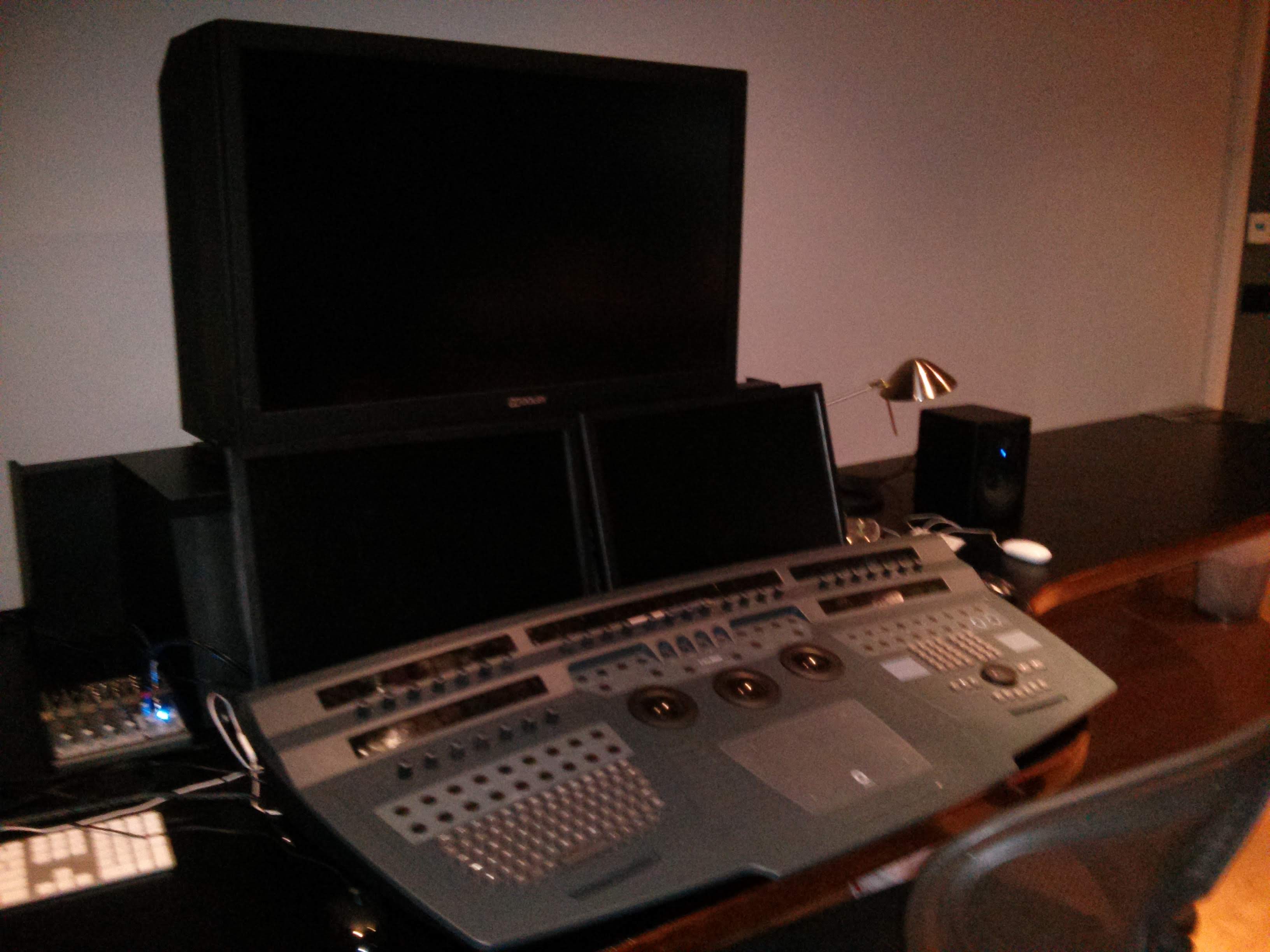 A color grading suite at Light Iron, where the visual style of a film gets set. Forgive the photo quality. This was 2011 to 2013, and I had an awful camera phone.
The machine room
Early on, I worked in the machine room. Sometimes people would run a cable across the aisle between racks for a quick one-off task, intending to clean it up later. They rarely did. The cable would end up powering something critical, and then another temporary cable would appear next to it.
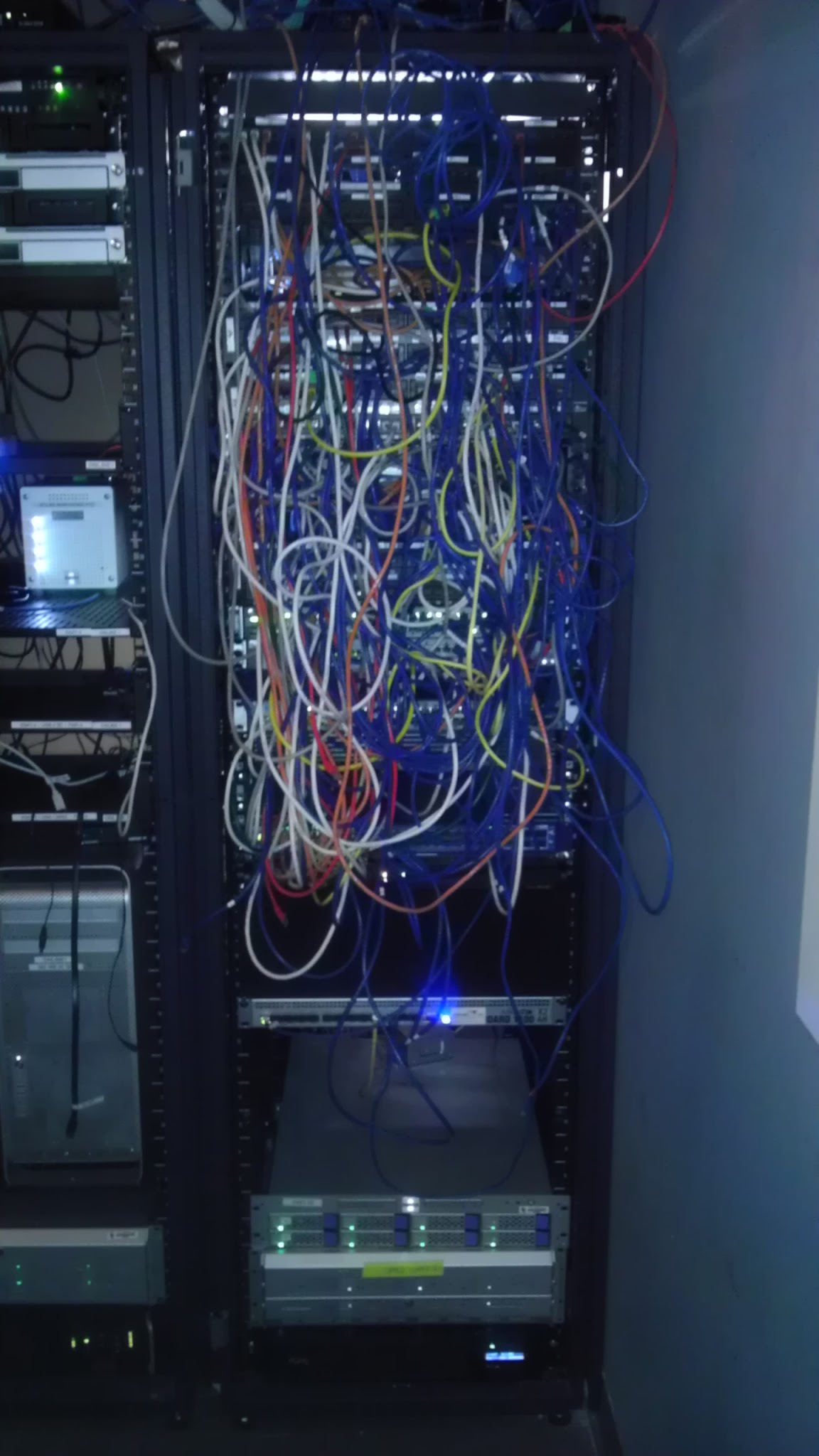
I started saying “temporary is permanent.” If you’re going to run a cable, run it properly, because it could be there forever. Eventually, the rack got so tangled that we spent an entire Thanksgiving break recabling the whole thing.
I thought I was talking about cables. I wasn’t.
Chris
When I started, I wanted to be a colorist, the person who sets the visual look of a film. To get there, you first learn conform, lining up the movie to match the editor’s cut. As I began training for that, I quickly found it wasn’t for me.
Meanwhile, I’d been helping our CTO, Chris Peariso, with technical work: projector troubleshooting, machine room builds, on-set equipment.
One day I told him I didn’t want to be a colorist anymore. I wanted to work with him. He said they could use the help, and I’d already shown I could handle it.
Then he asked me something I’ve thought about ever since: what skill would I want to have in five years? Post-production was already shrinking. The technical work was transferable.
There was no desk or space for me. His office was maybe 10 by 5. So I went to IKEA, bought the smallest desk I could find, drove it back from Burbank, and jammed it in the corner. We shared that cramped little room.
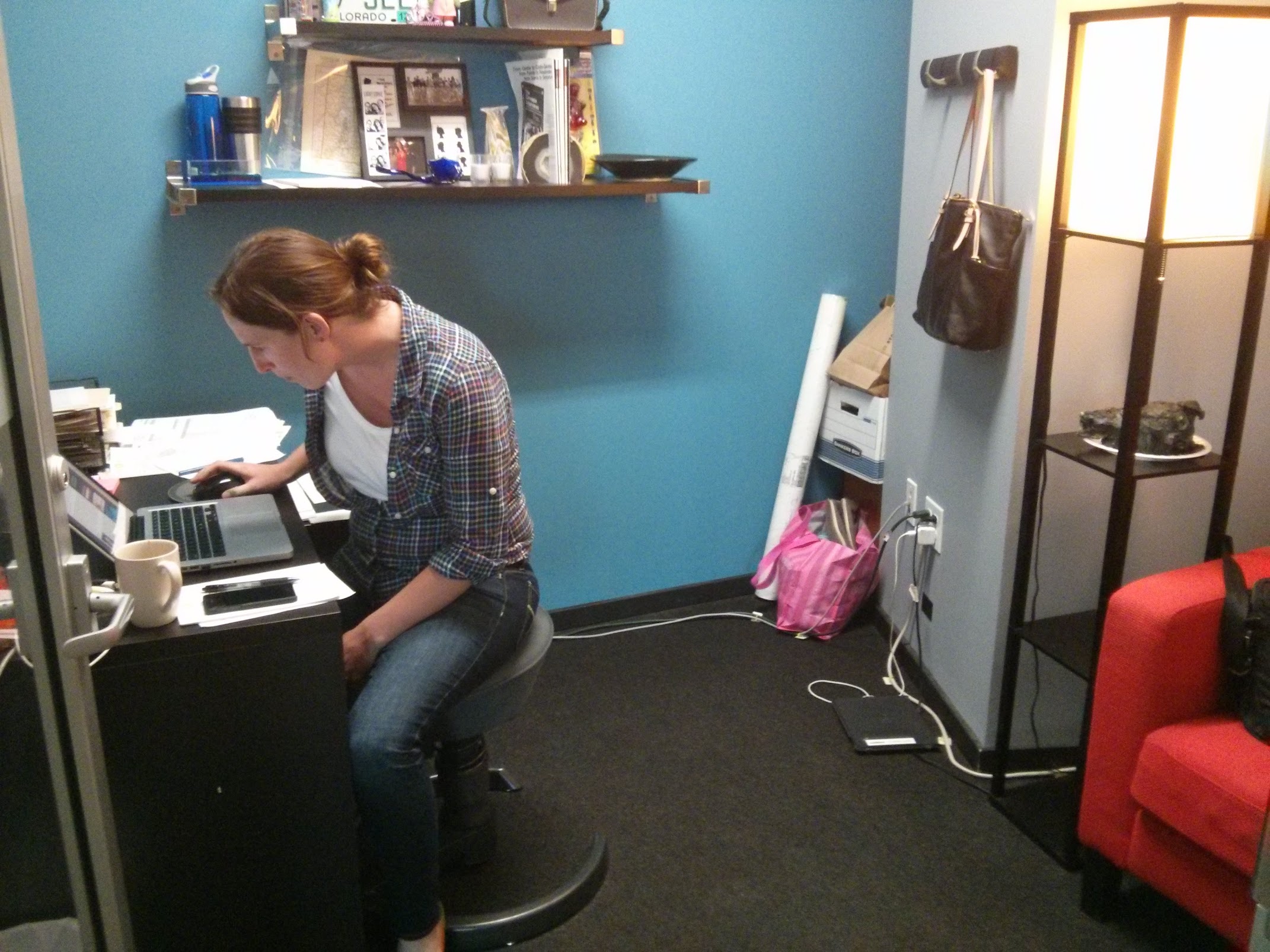 We had two desks in this tiny space, barely enough space to roll a chair back.
I’d be troubleshooting a projector in a theater with the client right there watching. Once, it was one of the original Twitter founders. Chris said, “The only reason I know this stuff is because someone asked me about it last week. I had to figure it out too.” He had a small head start.
Eventually we moved into a bigger office. Around then, I found a portrait at Scoops, an ice cream shop in East Hollywood, that looked exactly like Chris. It was painted on the back of a ceiling tile and cost $25. I bought it immediately, and it lived on our whiteboard. He said “Why’d you get a portrait of me painted?” and I said “Oh, I found it this way.” Later we found out it was the artist’s self-portrait. He just happened to look like Chris.
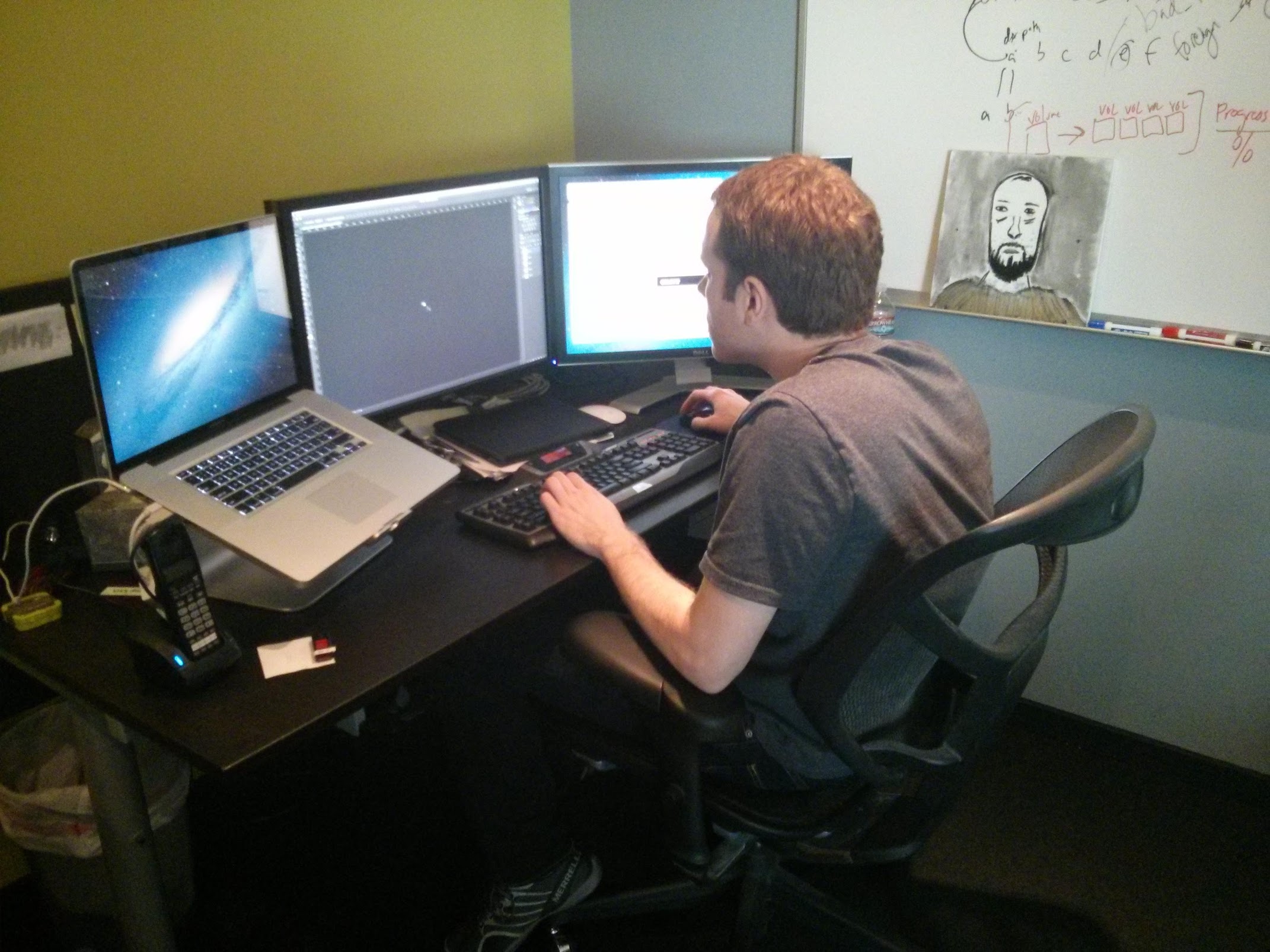 My colleague Bill, with Chris’ portrait from Scoops on the whiteboard.
Off the clock
A few of us started a lunch club. When you’re cooking for one you end up with too many leftovers, so we rotated who cooked. At first it was earnest: chili, lasagna. Bill would forget it was his day and bring a giant sub from the grocery store, which was enough to feed all of us. Once I made toast sandwiches, a piece of toast between two slices of untoasted bread. My friends humored me.
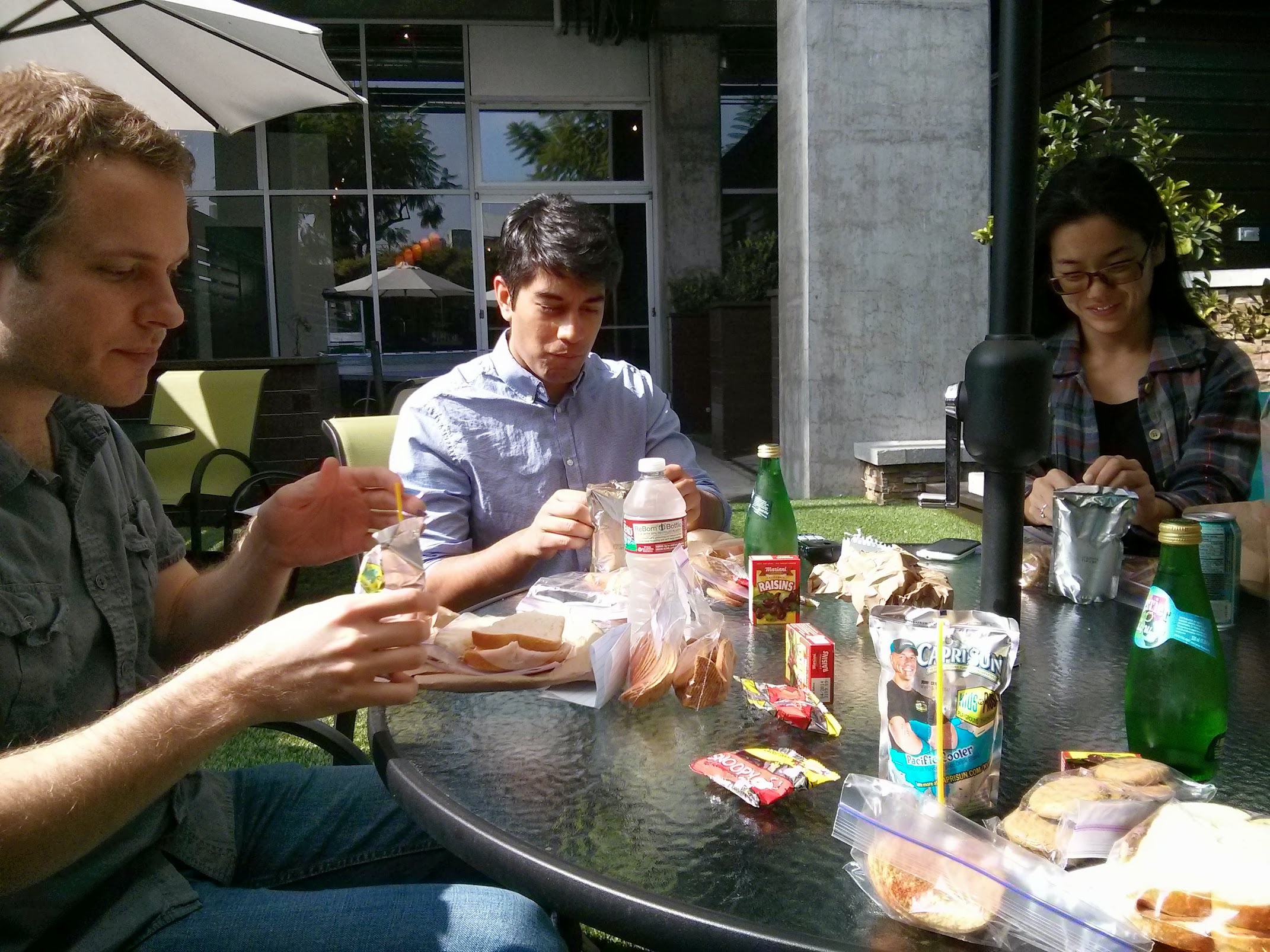 Bag sandwiches, Capri Suns, raisin boxes, and cookies. Elementary school rules.
One year at the company’s Christmas party at the bowling alley, my friend Amit got the lowest score. They had bought a huge trophy for last place and a normal one for first. Amit took the subway home. He told me people kept stopping him to ask where he got this three-foot trophy. “Did you win?” “No, I came in last.” “How big was the first-place trophy?” It was tiny.
How I started writing software
After we finished Girl with the Dragon Tattoo, Sony sent specs to archive terabytes of media to tape for long-term storage. They needed everything in a specific format, and we had no automated way to do it. Chris asked if I could figure something out.
I cobbled together a solution in AppleScript. It loaded a tape, wrote the data, generated a catalog, ejected the tape, and loaded the next one. Without it, archiving would have taken weeks.
But AppleScript sucks, so I started a rewrite. I’d been teaching myself Python through Zed Shaw’s Learn Python the Hard Way and reading Hacker News at night. On a flight back to Pennsylvania one Christmas, I started building a prototype with a real GUI.
Then Banshee came along. We’d signed on to do on-set daily archival for Cinemax, and HBO employees would need to operate the system. Chris said the shoot started in a week. Could I get it ready? I did. Janky, but it worked.
Each season brought new specs and new panic, always on a short timeline, often on top of my full-time job as a sysadmin. Carissa remembers waking up in the middle of the night during “Banshee season” and finding me still at my computer. One time I worked all weekend and through the night and still didn’t make the deadline. Had to call in and say it wasn’t done.
I put together an internal training series called Python for Post, modeled on Learn Python the Hard Way. Nine colleagues went through it. Some of them went on to software careers.
The Long Beach pipeline
One Monday morning, two interns had quit and the co-founders put out an urgent call: if you know anyone, reach out now. My colleague in the machine room had just left for his honeymoon. It was just me.
I called my friend Ryan McKeague from film school. He’d wrapped a feature. He drove up from Long Beach, interviewed that afternoon, got the offer that night, and started the next morning.
When I moved on to other work, Ryan stepped in. He runs his own company now. I like to think that path started because I needed help and he picked up the phone on a Monday.
I set up a field trip from Long Beach to tour the facility, and it became a recurring thing. Before long, Long Beach people kept coming through that door. My classmate Keenan, who I’d worked with on set, stayed for nearly fourteen years. I thought I was setting up a field trip.
Leaving
My 2012 self-evaluation describes completing the tape archival tool by “working full-time as a Systems Administrator during the day and full-time as a Software Developer at night.” I wrote it like it was a strength. Looking back, I was 25.
I decided I needed to drop one of the jobs because I was losing my mind, so I asked which I should prioritize. They said they needed me most as a sysadmin. Software would have to stay a side project.
I knew then I had to leave. I’d outgrown what the role could be and needed to go somewhere I could write software full time.
I sent my farewell email on May 29th, 2014. The replies came back from across the company. People wrote that I’d taught them things, that I’d made their work possible. I didn’t expect that.
What it means now
Five years after I left, they invited me back for the 10th birthday party. The invitation noted they’d grown from 7 people to over 100 across six cities. They thanked “incredible colleagues, both past and present.” I was still on the list.
Nobody left Light Iron, even after they left.
I thought about the people first. Some of them had been there for fifteen years. What had been family to me for three and a half years was their entire career.
Carissa said it’s not the place that created these connections. It was the time and the people it attracted: a bunch of twenty-somethings in early 2010s LA, working in film, broke and figuring it out, becoming each other’s family.
They took a chance on me when I was just some kid in a suit handing out resumes. Whatever happens to the place, the permanent parts remain.
If you worked at Light Iron during this time and I didn’t have a story about you here, the first draft was almost 6,000 words. A lot had to go. You’re not forgotten.